Based on user feedback, we have made a modification to ad expiration, reducing it from 90 days to 30 days.
To reduce the influx of spam emails, we have introduced more rigorous moderation measures, aiming to enhance users' overall experience.
$30 · Fish Habitat Rehabilitation Procedures: Watershed Restoration Technical
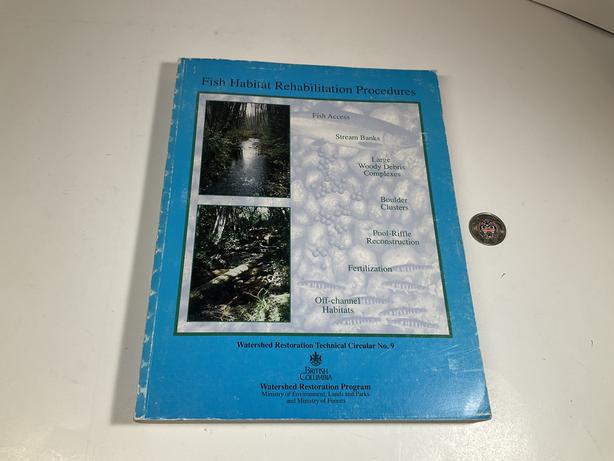
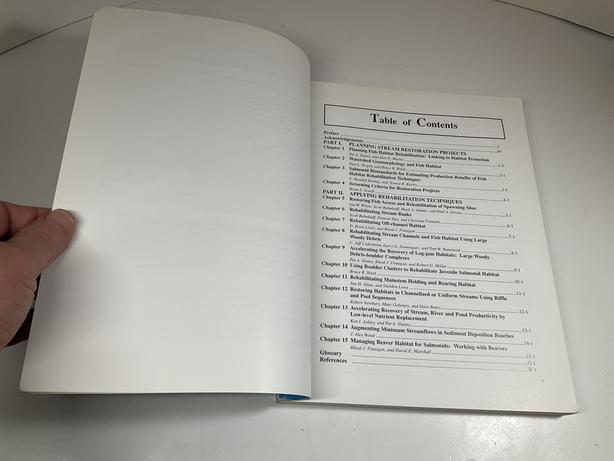
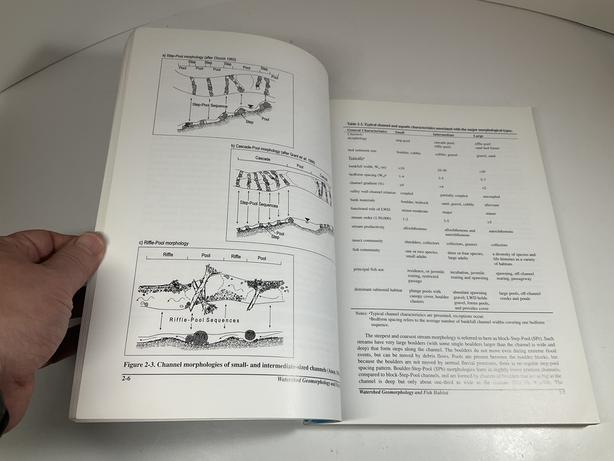
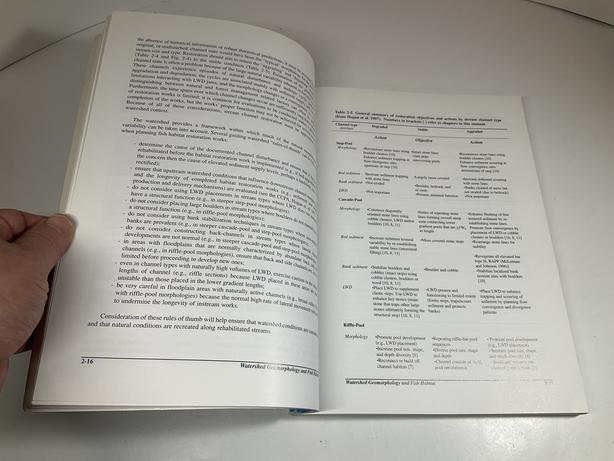
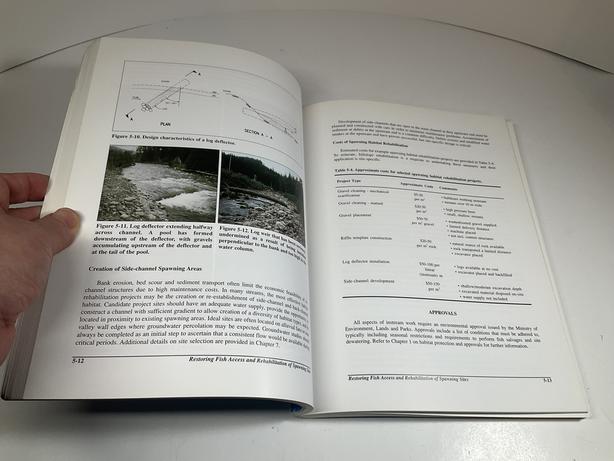
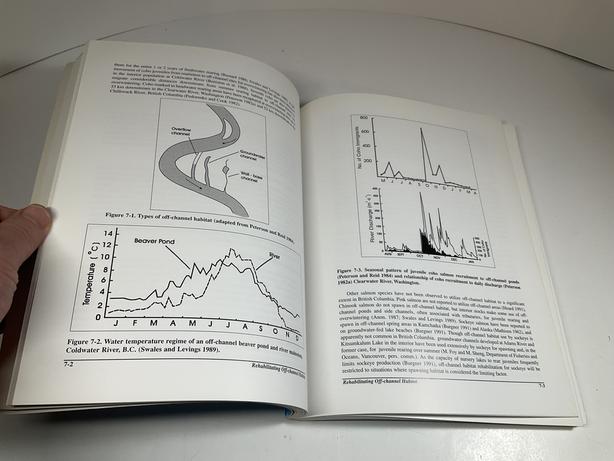
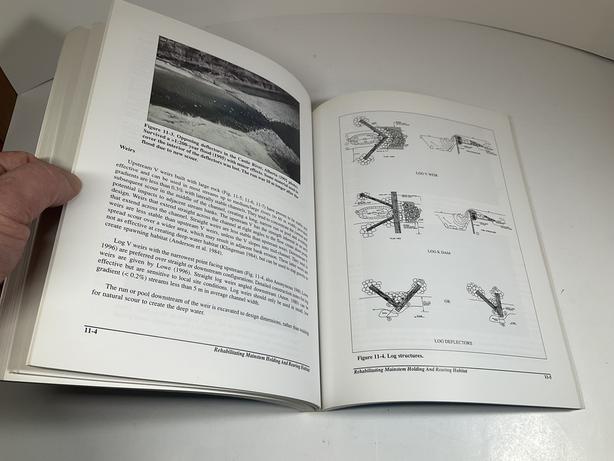








Fish Habitat Rehabilitation Procedures: Watershed Restoration Technical Circular No. 9. British Columbia Watershed Restoration program. Softcover, 1997, 330 pages. Fair condition, shows shelf wear. Recent reviews of the status of anadromous salmonid stocks of the western United States and British Columbia indicate that in less than a century, wild stocks have gone from a pristine state to one of numerous extinctions, threatened status or uncertain status. The causes of the declines are linked to various impacts dominated by overharvesting of weaker stocks, problems associated with hatcheries, hydroelectrical developments, and habitat loss. Nehlsen et al. (1991) concluded that for many stocks to survive and prosper in the next century, there is a need for a major shift to restore habitats and ecosystem function, rather than rely on artificial production. It is assumed throughout this guide that recovery of structural diversity and nutrient sources (often salmon carcasses) will eventually restore aquatic communities or the biodiversity of disturbed aquatic ecosystems. The loss of the large old-growth trees in stream channels with their massive rootwads as anchors, is the type of structure that cannot be easily duplicated, which is the rationale for cable anchoring of woody complexes to streamside trees and instream boulders, at least on the first pass. Salmon spawners, in particular, are keystone species as the vital link between aquatic and terrestrial communities, especially within the riparian zone. Most of the procedures in this guide are focused on the short term (20-50 years). For the long term, riparian protection and restoration needs to be implemented and maintained to recover riparian functions, to provide future desired conditions for fish and wildlife resources and to provide shrubs and deciduous trees for leaf litter mixed with mature coniferous trees for large wood recruitment and fluvial-resistive root systems. Finally, although practitioners of restoration have little control over fish harvest rates or ocean (or lake) conditions that cause shifts in migrant survivals, it is assumed that wise stock management in the fishery will ensure sufficient spawning escapements to these streams. See pictures Pickup in Langford Cross postedi